what are the first two signs of vitamin a deficiency
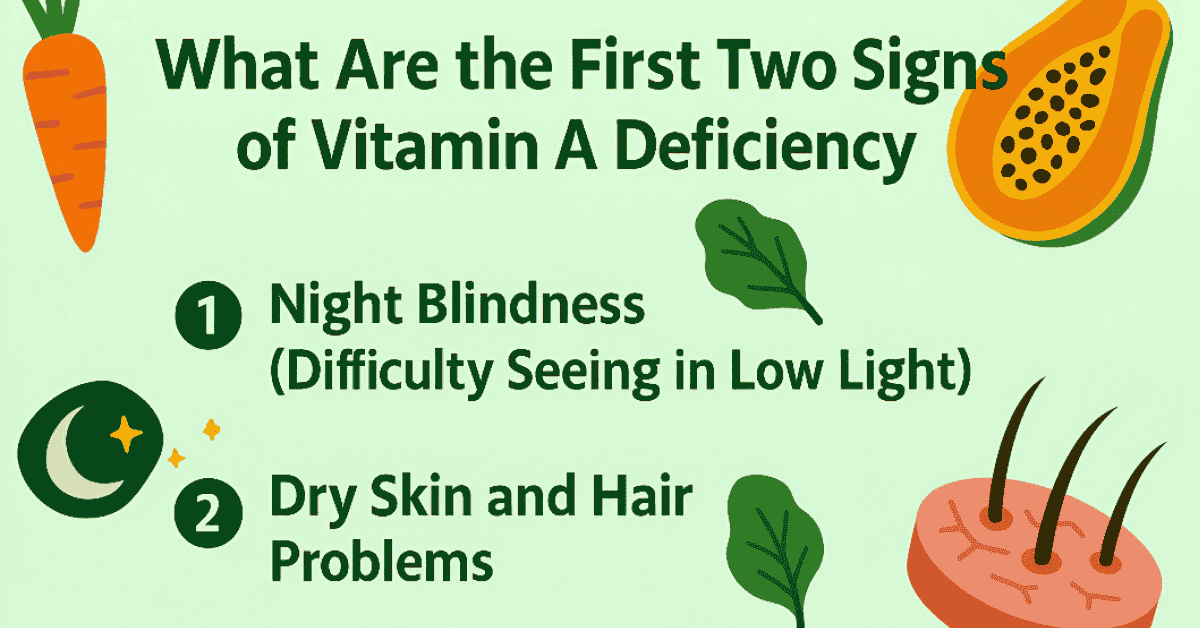
What Are the First Two Signs of Vitamin A Deficiency – Simple Guide for Everyone
Vitamin A is an essential nutrient that keeps your eyes, skin, and immune system healthy. But sometimes, due to poor diet or other reasons, people do not get enough vitamin A. This can lead to vitamin A deficiency, which affects your health slowly.
If you are wondering “what are the first two signs of vitamin A deficiency”, this article will explain it in a simple way and also give you solutions and precautions.
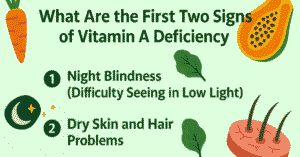
1️⃣ Night Blindness (Difficulty Seeing in Low Light)
One of the earliest signs of vitamin A deficiency is night blindness.
- People with this condition find it hard to see in dim light or at night.
- You might notice trouble while driving at night or walking in low-light areas.
- Sometimes your eyes feel dry or itchy.
Why it happens: Vitamin A helps make a chemical called rhodopsin, which is needed for your eyes to see in dim light. Without enough vitamin A, your eyes cannot adjust properly in darkness.
Simple Solution:
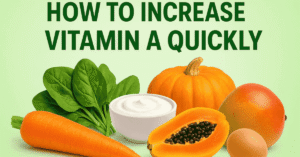
- Eat carrots, sweet potatoes, spinach, pumpkin, and mangoes regularly.
- These foods are rich in beta-carotene, which your body converts into vitamin A.
2️⃣ Dry Skin and Hair Problems
The second early sign of vitamin A deficiency is dry, rough skin and sometimes brittle hair.
- You may notice your skin loses glow and becomes flaky.
- Hair may become dry and weak, and nails may also appear brittle.
- Sometimes small bumps appear on the skin called keratosis pilaris, which is due to vitamin A shortage.
Why it happens: Vitamin A is important for skin repair and hydration. Without it, the skin loses moisture and softness, and natural oils are reduced.
Simple Solution:
- Include milk, cheese, eggs, and leafy green vegetables in your diet.
- Using natural oils like coconut oil can also help skin hydration.
Other Early Symptoms to Watch Out For
Even though night blindness and dry skin are the first two signs, some people may notice:
- Frequent infections (vitamin A supports immunity)
- Slow wound healing
- Dry eyes (xerophthalmia) in more severe cases
These signs show that your body is lacking enough vitamin A, and timely correction is important.
How to Prevent Vitamin A Deficiency
- Eat Vitamin A Rich Foods Daily
- Vegetables: Carrot, pumpkin, spinach, drumstick leaves
- Fruits: Mango, papaya, apricot
- Dairy: Milk, cheese, butter
- Meat & Eggs: Liver, eggs, chicken
- Supplements (if needed)
- Only if recommended by a doctor or nutritionist.
- Healthy Lifestyle Tips
- Drink plenty of water
- Avoid skipping meals
- Include a variety of colorful vegetables and fruits
Precautions
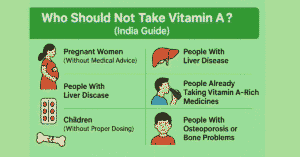
- Do not overtake vitamin A supplements without advice – excess vitamin A can be harmful.
- Pregnant women must consult a doctor before taking supplements.
- Children should get balanced diet and regular checkups to prevent deficiency.
Conclusion
The first two signs of vitamin A deficiency are usually night blindness and dry skin/hair problems. Recognizing these early can help you prevent serious health issues.
By including vitamin A rich foods in your daily diet and maintaining a healthy lifestyle, you can keep your eyes, skin, and overall health in top shape.
FAQs – Vitamin A Deficiency
1. What is vitamin A deficiency?
Answer:
Vitamin A deficiency occurs when your body does not get enough vitamin A from food. It can affect your eyes, skin, and immune system. Early signs include night blindness and dry skin.
2. What are the first two signs of vitamin A deficiency?
Answer:
The first two signs are usually:
- Night blindness – difficulty seeing in dim light
- Dry skin and hair problems – flaky skin, brittle hair, or rough patches
3. Which foods are rich in vitamin A?
Answer:
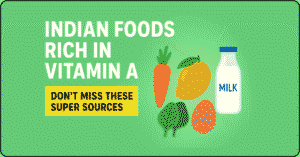
Vitamin A rich foods include:
- Vegetables: Carrot, pumpkin, spinach, drumstick leaves
- Fruits: Mango, papaya, apricot
- Dairy: Milk, cheese, butter
- Eggs and liver
Eating these regularly can prevent deficiency.
4. Can vitamin A deficiency cause blindness?
Answer:
Yes, if left untreated, vitamin A deficiency can lead to xerophthalmia and permanent blindness. Early signs like night blindness should not be ignored.
5. How can I prevent vitamin A deficiency naturally?
Answer:
- Include colorful fruits and vegetables in your diet
- Eat milk, eggs, cheese, and liver regularly
- Maintain a balanced diet and healthy lifestyle
- Consult a doctor before taking supplements
6. How long does it take to recover from vitamin A deficiency?
Answer:
With proper diet and guidance from a doctor, mild deficiency symptoms like night blindness and dry skin can improve in 2–4 weeks. Severe deficiency may take longer and may need supplements.
7. Can children get vitamin A deficiency?
Answer:
Yes, children are more prone to vitamin A deficiency due to growth needs. Ensure they get vitamin A rich foods and regular checkups to prevent health problems.

Post Comment