What Are the 5 Major Functions of Vitamin B12
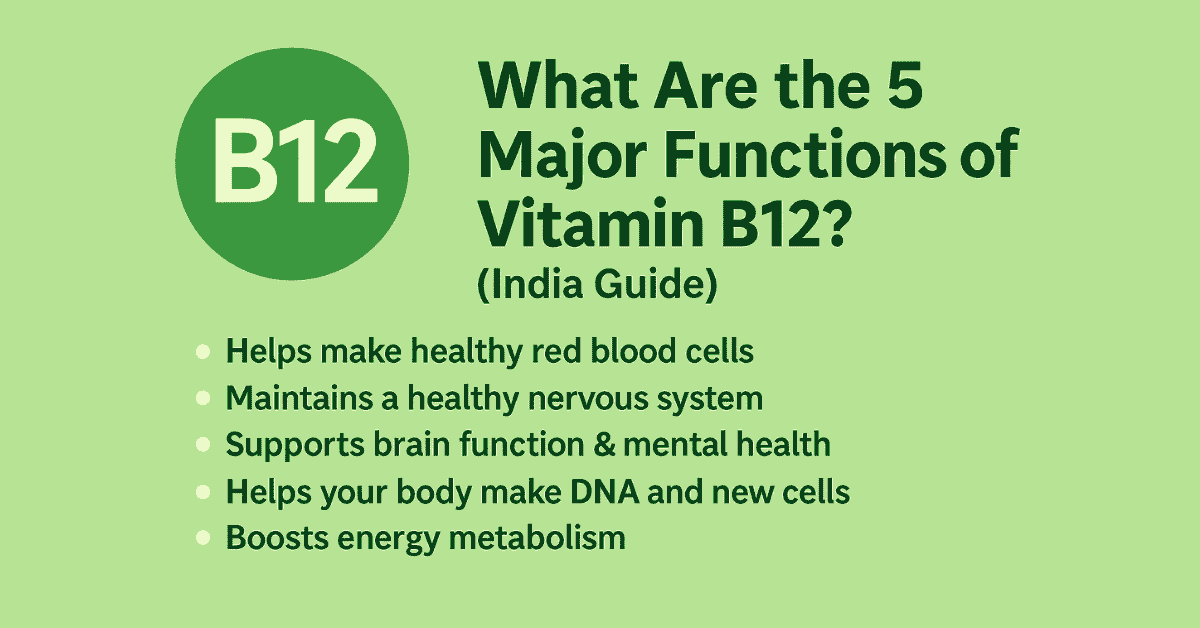
What Are the 5 Major Functions of Vitamin B12? (India Guide)
Vitamin B12, also called cobalamin, is one of the most important nutrients for your blood, brain, and nerves.
Although your body needs only a small amount, low B12 levels can lead to tiredness, memory problems, and even nerve damage.
If you’ve ever wondered what this vitamin really does, here are the five key functions of vitamin B12 and why they matter for your health.
1. Helps Make Healthy Red Blood Cells
Vitamin B12 plays a vital role in producing red blood cells (RBCs), which carry oxygen throughout your body.
- Without enough B12, RBCs become large and fragile (megaloblastic anemia).
- Anemia causes fatigue, weakness, pale or yellow skin, and shortness of breath.
- Severe, long-term deficiency can strain your heart and lead to palpitations.
Quick fact: Many Indians who feel tired or breathless are found to have low B12 anemia — especially vegetarians and older adults.
2. Maintains a Healthy Nervous System
Your nerves are covered by a protective fatty layer called the myelin sheath.
Vitamin B12 helps build and maintain this sheath, which allows fast and smooth nerve signal transmission.
- Deficiency damages myelin, leading to tingling, numbness, burning sensations, and poor balance.
- Severe cases can cause difficulty walking and even permanent nerve damage.
Important: B12 deficiency–related nerve damage can be irreversible if left untreated for too long.
3. Supports Brain Function & Mental Health
Vitamin B12 is crucial for neurotransmitters — the brain chemicals that control mood and memory.
- Low B12 is linked to brain fog, poor concentration, memory loss, depression, and irritability.
- Severe deficiency may even lead to confusion, dementia-like symptoms, or psychosis in rare cases.
Indian note: Vegetarians and older adults with B12 deficiency often report memory decline and low mood that improves after treatment.
4. Helps Your Body Make DNA and New Cells
B12 is needed to copy your genetic material (DNA) correctly when cells divide.
- Without B12, your body can’t make new cells efficiently — affecting your skin, gut lining, and immune cells.
- This is why deficiency can cause mouth ulcers, poor skin health, and slow healing.
5. Boosts Energy Metabolism
Vitamin B12 helps convert the food you eat — especially carbohydrates and fats — into energy (ATP).
- Deficiency can lead to constant tiredness and weakness because your cells aren’t making enough energy.
- It’s one reason many people feel energized after correcting a B12 deficiency.
Other Important Roles (Bonus)
- Heart health: B12 lowers homocysteine levels, which may reduce heart disease risk.
- Pregnancy & baby’s development: Essential for the baby’s brain and spinal cord.
- Hair & skin: Not a magic hair vitamin, but healthy B12 levels support overall cell growth.
How Much Vitamin B12 Do You Need?
- Adults: 2.4 mcg/day
- Pregnant women: 2.6 mcg/day
- Breastfeeding women: 2.8 mcg/day
Why B12 Deficiency Is Common in India
- Vegetarian & vegan diets (little or no B12)
- Low stomach acid in the elderly
- Medicines like metformin (diabetes) or acid blockers
- Chronic gut problems (gastritis, celiac, Crohn’s)
- Alcohol overuse
Natural Sources of Vitamin B12
Vegetarian Options
- Milk & curd (dahi)
- Paneer & cheese
- Fortified cereals and plant milks
Non-Vegetarian Options
- Eggs (especially yolk)
- Fish: mackerel, sardines, salmon
- Chicken & mutton
- Liver (very high — eat sparingly)
Tip: Pure plant foods don’t have reliable B12 — vegans usually need fortified foods or supplements.
When to Check Your B12 Levels
Ask for a serum B12 blood test if you have:
- Persistent fatigue or weakness
- Tingling in hands/feet
- Poor memory or brain fog
- Pale or yellow skin
- Mouth ulcers or sore tongue
- Depression or mood changes
Early testing prevents permanent nerve damage.
FAQs About Vitamin B12 Functions
1. What is the most important function of vitamin B12?
Supporting the nervous system and red blood cell formation.
2. Can B12 deficiency affect memory and mood?
Yes — low B12 is linked to brain fog, depression, and confusion.
3. Does vitamin B12 give you energy directly?
Not like caffeine, but it helps cells convert food into energy, reducing fatigue.
4. Is B12 good for pregnancy?
Yes. It’s crucial for the baby’s brain and spinal cord development.
5. Can B12 help with hair growth?
It’s not a direct hair vitamin, but deficiency can cause weak, slow-growing hair.
6. How long to recover after starting B12?
Energy improves in weeks; nerve healing may take months if deficiency was severe.
7. Can you get enough B12 naturally as a vegetarian?
Possible with milk, curd, paneer, and fortified foods, but many still need supplements.
8. Is B12 deficiency permanent?
Not if treated early. Long-term nerve damage may be permanent.
9. Can too much B12 be harmful?
B12 is water-soluble; excess is usually safe and excreted.
10. How often should I test B12?
If vegetarian, elderly, or on metformin/acid blockers — test every 1–2 years.
Final Takeaway
Vitamin B12 has five main functions:
- Making healthy red blood cells
- Protecting the nervous system
- Supporting brain and mental health
- Helping make DNA and new cells
- Boosting energy metabolism
If you’re vegetarian, vegan, older, or have digestive issues, you’re at higher risk of deficiency.
Eat dairy, eggs, fish, fortified foods, or take supplements if needed — and test your B12 levels if you have fatigue, tingling, or memory issues.




Post Comment