How Much Vitamin A Per Day Is Safe
How Much Vitamin A Per Day Is Safe? (India Guide)
Vitamin A is an essential nutrient for good eyesight, strong immunity, healthy skin, and growth.
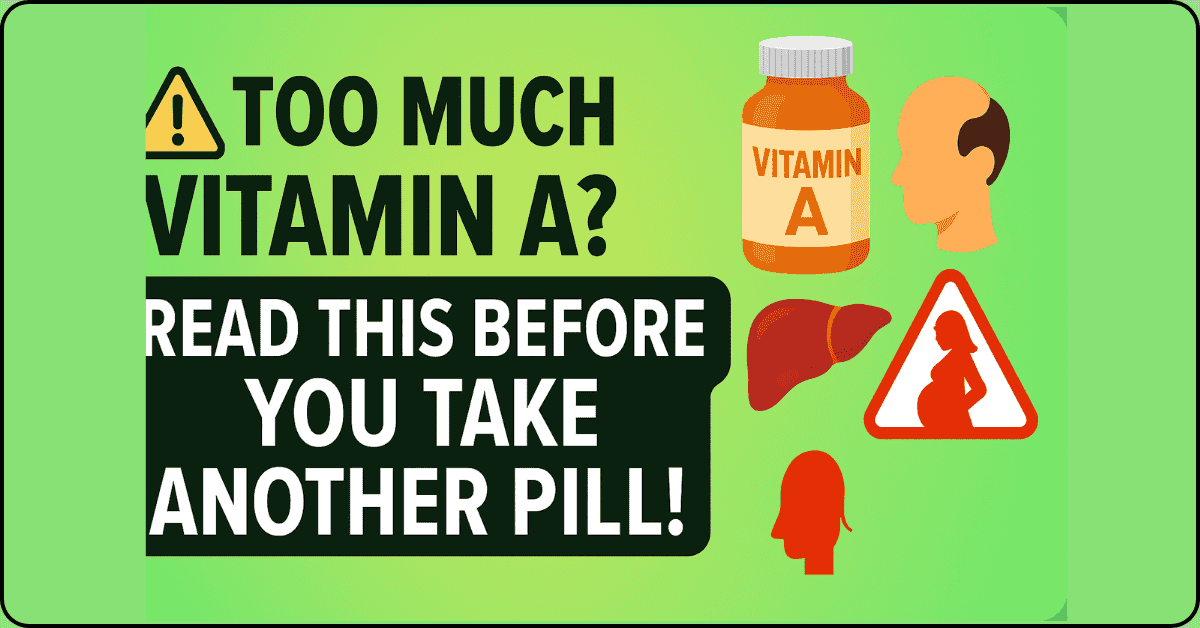
But because it’s fat-soluble, extra vitamin A stays stored in the liver. Taking too much for a long time can lead to vitamin A toxicity.
If you’re in India and wondering how much vitamin A you really need daily — here’s a clear answer.
Recommended Daily Allowance (RDA) in India
According to the Indian Council of Medical Research (ICMR):
- Men: 900 mcg retinol equivalent (≈3,000 IU)
- Women: 700 mcg (≈2,333 IU)
- Pregnant women: 770 mcg (≈2,565 IU)
- Breastfeeding women: 1,300 mcg (≈4,333 IU)
- Children: 300–600 mcg, depending on age
Note: 1 IU vitamin A ≈ 0.3 mcg retinol.
Labels may show vitamin A as IU or mcg (RE — retinol equivalents).
Upper Safe Limit (Tolerable Upper Intake Level)
The upper safe limit (UL) for adults is 3,000 mcg (≈10,000 IU) of preformed vitamin A per day.
Going above this regularly can cause hypervitaminosis A — liver damage, bone pain, hair loss, and birth defects in pregnancy.
- Food alone is rarely a problem — the body controls conversion of plant beta-carotene.
- Supplements + cod liver oil + fortified foods together can push you over the limit.
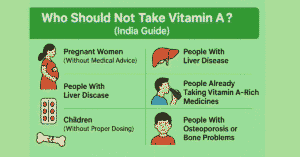
Safe Vitamin A Intake for Different People
- Healthy adults: Stay close to RDA; do not exceed 3,000 mcg/day unless prescribed.
- Pregnant women: Be extra careful — too much can cause birth defects. Only take prescribed prenatal vitamins.
- Children: Should get vitamin A from food or doctor-approved drops (if deficiency risk). Overdosing children can be dangerous.
Vitamin A Sources in Indian Diet
Plant-Based (Beta-Carotene — Safer)
- Carrots (gajar)
- Pumpkin (kaddu)
- Sweet potato (shakarkand)
- Spinach (palak)
- Methi, amaranth, drumstick leaves
- Mango, papaya, cantaloupe
Animal-Based (Preformed Retinol)
- Milk, ghee, butter
- Egg yolk
- Liver (very high — eat small amounts)
- Oily fish (mackerel, salmon, cod)
Tip: Cook veggies with a little oil or ghee — vitamin A needs fat to absorb well.
How to Avoid Overdose
- Don’t mix many supplements — check total IU/mcg.
- Skip high-dose capsules unless doctor advises.
- Pregnant? Always confirm dose with your doctor.
- Use food as the main source — especially colorful vegetables and fruits.
FAQs About Safe Vitamin A Intake
1. How much vitamin A is too much per day?
More than 3,000 mcg (≈10,000 IU) of preformed vitamin A daily may lead to toxicity.
2. Can you get too much vitamin A from food?
It’s rare from plant foods (carrots, spinach, mango) but possible from eating a lot of animal liver or taking high-dose supplements.
3. Is beta-carotene safer than retinol?
Yes. Beta-carotene is converted only as needed, so it’s less likely to cause toxicity.
4. How much vitamin A is safe during pregnancy?
Around 770 mcg (≈2,565 IU) is recommended. Avoid high-dose supplements unless prescribed.
5. What are signs of vitamin A overdose?
Headache, nausea, dizziness, dry skin, hair loss, liver pain, and bone discomfort.
6. Can children overdose on vitamin A drops?
Yes, if given too often or in high doses. Always follow the doctor’s schedule.
7. Do I need supplements if I eat vegetables and dairy?
Most healthy adults don’t. Supplements are for diagnosed deficiency or special cases.
8. What is the difference between IU and mcg?
1 IU ≈ 0.3 mcg of retinol (preformed vitamin A).
9. Is it safe to take multivitamins with vitamin A every day?
Yes if the total vitamin A per day stays under 3,000 mcg (10,000 IU).
10. How long does vitamin A stay in the body?
It’s fat-soluble, so stored for months in the liver and fat tissues.
Final Takeaway
Most Indians need 700–900 mcg (2,300–3,000 IU) of vitamin A daily.
Going above 3,000 mcg (10,000 IU) regularly can cause toxicity and health issues.
Stick to a balanced diet with vegetables, fruits, dairy, and eggs.
If you use supplements, add up the total IU/mcg and check with your doctor — especially if pregnant or giving vitamin drops to children.








Post Comment