Is Too Much Vitamin A Harmful

Is Too Much Vitamin A Harmful? A Complete Guide for Indians
Vitamin A is an essential nutrient that keeps your eyes healthy, supports your immune system, and helps your body grow and repair tissues. But like many nutrients, taking it in very high amounts can cause health problems. In India, where diets are changing and supplements are easily available online, it’s important to know how much vitamin A you really need — and what happens if you take too much.
What Is Vitamin A and Why Do We Need It?
Vitamin A is a fat-soluble vitamin that comes in two main forms:
- Preformed vitamin A (retinol and retinyl esters) — found in animal foods like liver, eggs, dairy.
- Provitamin A carotenoids (like beta-carotene) — found in plant foods such as carrots, spinach, mangoes.
Your body converts carotenoids into active vitamin A when needed. This vitamin helps with:
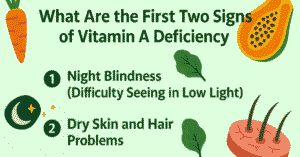
- Good vision, especially night vision
- Healthy skin and mucous membranes
- Strong immune system
- Growth and reproduction
Recommended Daily Intake of Vitamin A in India
The Indian Council of Medical Research (ICMR) recommends about:
- Men: 900 mcg (3,000 IU) per day
- Women: 700 mcg (2,333 IU) per day
- Pregnant women: 770 mcg (2,565 IU) per day
- Breastfeeding women: 1,300 mcg (4,333 IU) per day
- Children: 300–600 mcg depending on age
Tip: Supplement labels may use IU (International Units) or mcg (micrograms).
1 IU vitamin A ≈ 0.3 mcg retinol.
How Much Is Too Much?
Taking more than the Tolerable Upper Intake Level (UL) can cause vitamin A toxicity.
For adults, this UL is around 3,000 mcg (10,000 IU) of preformed vitamin A per day.
- Getting slightly more from food usually isn’t harmful because the body controls conversion of carotenoids.
- Overdose usually happens from high-dose supplements, cod liver oil, or multiple multivitamins.
Symptoms of Too Much Vitamin A (Toxicity)
Early signs (acute toxicity):
- Headache
- Dizziness
- Nausea or vomiting
- Blurred vision
Long-term (chronic toxicity):
- Dry, rough skin
- Hair loss
- Cracked lips
- Bone and joint pain
- Liver damage
- Fatigue and irritability
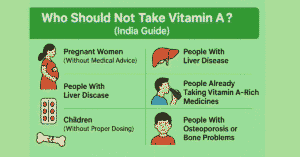
In pregnancy, excess vitamin A can lead to birth defects — always check prenatal vitamin labels.
Why Overdose Happens in India
- Self-supplementation: Buying high-dose vitamin A online without guidance.
- Overuse of syrups for children: Some parents repeat doses too often.
- Animal liver dishes: Very high in vitamin A; eating too much can be risky.
- Mixing supplements: Using cod liver oil plus multivitamins unknowingly doubles or triples intake.
Safe Ways to Get Vitamin A
- Eat a balanced diet
- Carrots, sweet potatoes, pumpkin, spinach, kale, mangoes, papaya (beta-carotene).
- Milk, butter, eggs, and fish liver oils for preformed vitamin A.
- Use supplements carefully
- Stick to trusted brands and recommended doses.
- Avoid combining multiple high-dose products.
- Check with your doctor
- Especially if pregnant, breastfeeding, or taking other medicines.
Frequently Asked Questions (FAQs)
1. How much vitamin A per day is safe for adults in India?
For most adults, up to 900 mcg (3,000 IU) for men and 700 mcg (2,333 IU) for women is safe.
Do not exceed 3,000 mcg (10,000 IU) per day without a doctor’s advice.
2. Can too much vitamin A cause hair loss?
Yes. Long-term high doses may lead to hair thinning and hair loss, along with dry skin and brittle nails.
3. What is vitamin A toxicity?
Vitamin A toxicity (hypervitaminosis A) happens when you have excess vitamin A stored in the liver.
Symptoms include headache, nausea, joint pain, and liver issues.
4. Is beta-carotene safer than preformed vitamin A?
Yes. Your body converts beta-carotene (from plants) into vitamin A only as needed, making it safer than high-dose retinol supplements.
5. Can pregnant women take vitamin A?
Pregnant women should avoid high doses because it can cause birth defects.
Only take vitamin A supplements if prescribed by your doctor.
6. Can you overdose on vitamin A from food alone?
It’s rare from plant foods (carrots, spinach) because the body controls conversion.
But eating a lot of animal liver or taking high-dose supplements can cause overdose.
7. How long does vitamin A stay in the body?
Vitamin A is fat-soluble, so it can stay stored in the liver for months.
That’s why frequent high-dose use increases risk.
8. What are the first warning signs of vitamin A overdose?
Early signs include headache, nausea, dizziness, and blurred vision.
9. Is it okay to take vitamin A every day?
Yes, if you stay within the recommended daily allowance (RDA).
Avoid exceeding 3,000 mcg (10,000 IU) regularly.
10. How can I naturally increase vitamin A?
Eat carrots, pumpkin, spinach, mangoes, papaya (beta-carotene) and moderate amounts of milk, eggs, butter, fish.
Final Thoughts
Yes — too much vitamin A can be harmful.
While deficiency is still seen in India, many people now risk overdose by taking multiple supplements or eating very high vitamin A foods like liver. Stick to the recommended daily amount, focus on a balanced Indian diet, and consult a doctor before high doses — especially during pregnancy.








Post Comment