Which Vitamin B12 Is Better Methylcobalamin or Cyanocobalamin
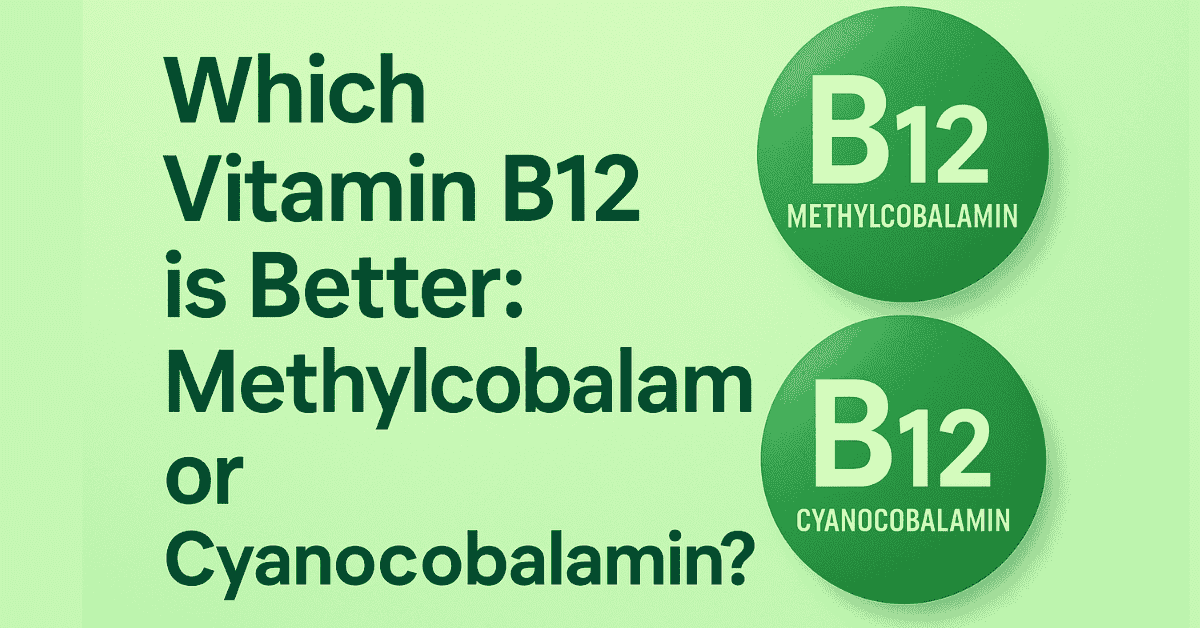
Which Vitamin B12 Is Better Methylcobalamin or Cyanocobalamin? (India Guide)
Vitamin B12 supplements come in different forms, and the two most common are methylcobalamin and cyanocobalamin.
If you’re trying to correct a B12 deficiency, you might wonder: Which one is better for me?
This guide breaks down the differences, benefits, safety, and which form works best for Indians.
Quick Answer
- Both methylcobalamin and cyanocobalamin can raise your B12 levels effectively.
- Methylcobalamin is the active form found naturally in the body and may be slightly better for nerve health.
- Cyanocobalamin is synthetic, cheaper, and well-researched — good for most people.
For most adults, either form is safe and effective. Choice often depends on cost, availability, and your doctor’s advice.
Understanding Vitamin B12 Forms
1. Methylcobalamin
- Active, natural form of B12.
- Already ready for your body to use — especially for the nervous system and brain.
- Common in high-quality supplements and injections.
2. Cyanocobalamin
- Synthetic form of B12 used in most standard supplements.
- The body converts it into active forms (methylcobalamin and adenosylcobalamin).
- Very stable and cost-effective.
How They Work in the Body
- Methylcobalamin: Goes straight into metabolic pathways for nerve repair and DNA synthesis.
- Cyanocobalamin: Needs to convert to methylcobalamin and adenosylcobalamin. Most healthy people convert it easily.
Key Differences
| Feature | Methylcobalamin | Cyanocobalamin |
|---|---|---|
| Origin | Natural / active | Synthetic |
| Conversion | Ready to use | Must convert in body |
| Stability | Less stable, costlier | Very stable, cheaper |
| Research | Fewer long-term studies | Most studied, proven safe |
| Use for Nerve Health | May support nerve repair directly | Works but needs conversion |
| Price (India) | Usually higher | More affordable |
Effectiveness for B12 Deficiency
- Both forms can correct deficiency and treat symptoms like fatigue and anemia.
- Some studies suggest methylcobalamin may support nerve regeneration better, but evidence isn’t conclusive.
- Doctors often prescribe methylcobalamin injections for people with nerve damage, neuropathy, or diabetes-related nerve pain.
Safety and Side Effects
- Both are generally safe, even in high doses.
- Cyanocobalamin releases a tiny amount of cyanide, but it’s extremely small and safe for healthy kidneys.
- People with kidney disease or heavy smokers sometimes prefer methylcobalamin to avoid cyanide processing.
Which One Should You Choose?
Go for Methylcobalamin if:
- You have nerve symptoms (tingling, numbness, neuropathy).
- You want the active form that doesn’t need conversion.
- You have kidney issues or smoke heavily.
Go for Cyanocobalamin if:
- You’re generally healthy and need an affordable, effective supplement.
- You want a well-researched, stable form for prevention or mild deficiency.
Tip: Many people use cyanocobalamin for daily tablets and methylcobalamin for nerve-focused injections.
B12 Dosage (India)
- General deficiency prevention: 250–500 mcg/day orally
- Treatment of deficiency: 1000 mcg (1 mg) daily or weekly as prescribed
- Severe deficiency with nerve damage: Doctor may give methylcobalamin injections for faster nerve repair
B12 is water-soluble — extra is usually safe and flushed out.
B12 Foods to Support Supplements
- Milk, curd, paneer
- Egg yolks
- Fish (mackerel, salmon, sardines)
- Chicken, mutton (liver very high — eat sparingly)
- Fortified cereals, plant milks
Supplements work best alongside a balanced diet.
Common Myths About B12 Forms
- “Cyanocobalamin is harmful because of cyanide.”
➝ False. The amount of cyanide is minuscule and safe for healthy people. - “Only methylcobalamin works.”
➝ Not true. Cyanocobalamin is proven to raise levels and reverse deficiency. - “Natural means always better.”
➝ Methylcobalamin is natural, but stability and cost can be issues.
FAQs About Methylcobalamin vs Cyanocobalamin
1. Which form of B12 is best for nerve damage?
Methylcobalamin may have an advantage for nerve repair, but both work to correct deficiency.
2. Is cyanocobalamin safe for long-term use?
Yes. It’s well-studied and safe for most healthy people.
3. Do vegetarians in India need methylcobalamin only?
No. Either form works — focus on getting enough B12, especially if vegetarian.
4. Are injections better than tablets?
Injections (often methylcobalamin) are faster for severe deficiency or poor absorption. Tablets work for mild cases.
5. Can kids take methylcobalamin or cyanocobalamin?
Yes, in age-appropriate doses. Always consult a pediatrician.
6. Is methylcobalamin more natural?
Yes, it’s the active form found in your body. But that doesn’t mean cyanocobalamin is bad.
7. Can too much B12 be harmful?
No serious toxicity — extra is excreted in urine.
8. If I have kidney disease, which B12 should I take?
Methylcobalamin is often preferred, but check with your doctor.
9. Which is cheaper in India?
Cyanocobalamin tablets are usually the most affordable.
10. Which form is used in most multivitamins?
Most multivitamins use cyanocobalamin due to stability and cost.
Final Takeaway
- Both methylcobalamin and cyanocobalamin can effectively treat B12 deficiency.
- Choose methylcobalamin if you have nerve damage, kidney problems, or want the active form.
- Choose cyanocobalamin if you need an affordable, well-studied option for prevention or mild deficiency.
- Always follow your doctor’s advice for dosage — especially if you have severe deficiency or other health issues.








Post Comment